
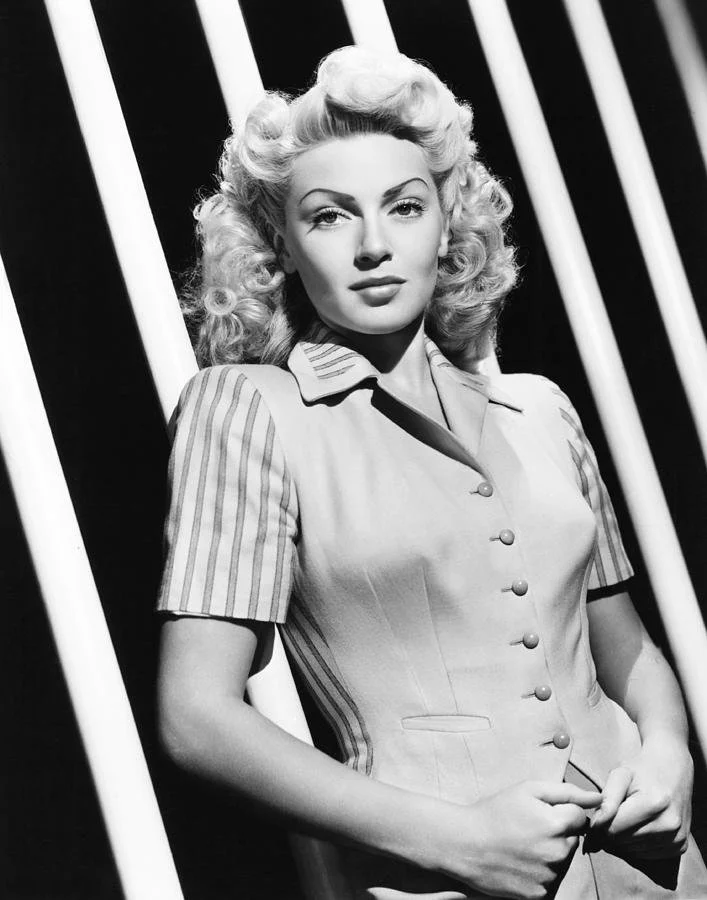
Lana Turner: The Sweater Girl Who Became MGM's Most Glamorous Star — Scandal, Survival, and a Very Hollywood Murder
On Good Friday, 1958, a man lay dead on a pink bedroom floor in Beverly Hills — a severed aorta, almost no blood, a knife with no fingerprints in the bathroom sink, and the most famous actress in America asking the police chief if she could take the blame. By the time he arrived, the story of what happened that night had already been written.
Before she became Hollywood's "Sweater Girl" — before she was the platinum blonde MGM built in a dead woman's image — Lana Turner was Julia Jean Turner, a bootlegger's daughter from a mining town in Idaho, raised on instability and crackers and milk, shaped by a father murdered in an alley over his gambling winnings when she was nine.
This episode traces her invention, her rise, and the price of being a fantasy the studio designed down to the last detail — from a soda fountain on Sunset Boulevard to a personal contract at sixteen, from a seventy-five-foot tracking shot in a tight sweater to the platinum hair and the new name and the slot left open by Jean Harlow's death. It follows her through the breakthrough of Ziegfeld Girl, the role that finally proved she could act in The Postman Always Rings Twice, the suspensions and the slide, and the improbable comeback of Peyton Place — an Oscar nomination for a woman everyone in the industry had written off.
It also follows the private life the studio fought to contain. The marriages — seven of them, eight ceremonies — to a bandleader who wanted to belittle her, a "tobacco heir" who turned out to run a cigar store, and the man she'd call the love of her life, who she lost to a telegram and a coward's silence. The pregnancies the studio ended without anesthesia and billed to her paycheck. The Tarzan who abused her daughter under her own roof for three years. And finally Johnny Stompanato — the mob enforcer she couldn't leave, the beatings she couldn't hide, and the fourteen-year-old who ended it with an eight-inch carving knife.
This is the story of a girl who spent her whole life searching for something that would stay — built into the most looked-at woman in America by a machine that owned her face, her name, and her past, and who survived nearly all of it.
Because Lana Turner was never just the murder, or the scandals, or the seven husbands. She was a genuine movie star in the oldest sense of the word — a face that defined an era and never quite left it. Decades after her death, a singer named Elizabeth Grant went looking for a name that sounded like old Hollywood glamour and faded film-reel romance, and found it in her: Lana Del Rey. The Sweater Girl is still out there, still shaping what we mean when we say "movie star."
Releasing Tuesday, June 16, 2026. Listen to our other episodes now, wherever you get your podcasts.


A century of Marilyn.

June 1, 2026, marks 100 years since Marilyn Monroe was born. To honor her centennial, WTWMI launches with a three-part series tracing her invention, her rise, and the cost of becoming the most famous woman in the world.
Listen to Part One, Part Two, and Part Three now.
A story of strength, ambition, and self-invention — about a girl who shouldn't have had a chance, and the woman she gave everything to become.
WTWMI — listen now, wherever you get your podcasts.